For Practitioners
Drama Therapy Techniques
A reference for the major models, methods, and clinical approaches used in drama therapy practice today.
A reference for the major models, methods, and clinical approaches used in drama therapy practice today.
Skim this table first, then read the detailed sections below. Most therapists end up blending several.
| Model | Developed by | Best for | Signature move |
|---|---|---|---|
| Integrative Five Phase Model | Renée Emunah | Structured group work, training programs, progressive treatment. | Dramatic play → scenework → role play → culminating enactment → dramatic ritual. |
| Psychodrama | J.L. Moreno | Grief, family systems, addiction recovery. | Role reversal, empty chair, doubling. |
| Developmental Transformations | David Read Johnson | Trauma, PTSD, autism, chronic mental illness. | Free-form improvised play inside a shared playspace. |
| Role Theory & Method | Robert Landy | Identity, depression, life transitions. | Mapping and rebalancing the client's role system. |
| Narradrama | Pam Dunne | Anxiety, trauma, eating disorders, youth. | Externalize the problem, re-author the story. |
| Playback Theatre | Jonathan Fox | Community, group work, post-crisis healing. | A teller's story, played back in the moment. |
| Embodiment-Projection-Role | Sue Jennings | Early trauma, attachment, children. | Meet clients at their developmental layer. |
| Sesame Approach | Marian Lindkvist | Learning disability, autism, dementia, refugee work. | Oblique work through myth, Laban movement, and touch. |
| Theatre of the Oppressed | Augusto Boal | Collective trauma, marginalized groups. | Forum Theatre, audience rewrites the scene. |
| Objects, Puppets & Masks | Multiple traditions | Children, overwhelmed clients, dissociation. | Project the feeling onto something you can hold. |
Drama therapy uses several distinct clinical methods. The major ones are the Integrative Five Phase Model (Renée Emunah), Role Theory (Robert Landy), Narradrama (Pam Dunne), Playback Theatre (Jonathan Fox), Developmental Transformations (David Read Johnson), the Sesame Approach (Marian Lindkvist), and Psychodrama (Jacob Moreno). Each has a different theoretical base and is suited to different populations and clinical goals. This page is a reference, not a how-to; methods should only be used by trained drama therapists.
Drama therapy is not one single method. It covers a wide range of approaches, each with its own theoretical roots and clinical applications. Below are the major techniques and models used by Registered Drama Therapists worldwide.
Most working drama therapists don't stay inside one model. They train in two or three, develop an eye for which one the client in front of them needs, and blend. The models below are doorways, not denominations.
Developed by: Renée Emunah, PhD, BCT
Emunah's Integrative Five Phase Model describes the developmental arc of the drama therapy process across five progressive phases: (1) Dramatic Play, accessing spontaneity and playfulness; (2) Scenework, expanding emotional and role repertoire through improvised or scripted scenes; (3) Role Play, actively exploring real-life issues and relationships; (4) Culminating Enactment, facilitating healing of deep-seated issues through fully realized dramatic work; and (5) Dramatic Ritual, supporting integration and closure. The phases spiral toward deeper levels of self-revelation and intimacy over the course of treatment.
Clinical applications: Group and individual drama therapy across settings. Widely used in NADTA-approved training programs and foundational to drama therapy education in North America.
Key text: Acting for Real: Drama Therapy Process, Technique, and Performance by Renée Emunah
Developed by: Jacob Levy Moreno
Psychodrama is the grandparent of drama therapy. Developed by J.L. Moreno in the early 20th century, it involves the structured dramatic enactment of significant life scenes. The protagonist (client) enacts scenes from their past, present, or future with the help of group members playing auxiliary roles, guided by a trained director.
Core techniques: Role reversal (stepping into another person's role), the empty chair, doubling (another person voicing the protagonist's unexpressed thoughts), mirroring, and surplus reality (enacting impossible or imagined scenes).
Clinical applications: Grief, unresolved relationships, trauma, family systems work, addiction recovery.
Note: Psychodrama and drama therapy overlap but are distinct. Drama therapists are trained in both and may draw on psychodrama techniques within their practice.
Developed by: Robert Landy, PhD, BCT
Robert Landy's Role Theory holds that the human personality is best understood as a system of roles: the various characters, personas, and ways of being that we inhabit throughout our lives. Drama therapy, in this model, helps clients identify, expand, and integrate their role repertoire.
Core concept: The Role System. Landy identified a taxonomy of over 80 roles (Hero, Victim, Fool, Survivor, etc.) that appear across cultures and theatrical traditions. In therapy, clients explore which roles they over-rely on, which are underdeveloped, and how to achieve greater flexibility and balance.
Clinical applications: Depression, identity issues, interpersonal difficulties, life transitions, work with actors and performers.
Key text: Persona and Performance by Robert Landy
Developed by: Pam Dunne, PhD, BCT
Narradrama integrates Narrative Therapy (developed by Michael White and David Epston) with drama therapy methods. In Narradrama, clients are helped to externalize problems (treating them as separate from the self), then use drama to re-author dominant problem narratives and develop new, preferred stories about their lives.
Core technique: Externalizing and Embodying. Rather than saying "I am anxious," the client gives their anxiety a name, a voice, a physical form, and enters into dialogue with it through drama.
Clinical applications: Children, adolescents, trauma, anxiety, eating disorders, substance use. Works especially well with clients who are resistant to direct discussion of their problems.
Key text: Narradrama: Integrating Drama Therapy, Narrative, and the Creative Arts by Pam Dunne
Developed by: David Read Johnson, PhD, BCT
Developmental Transformations is one of the most widely taught drama therapy models in North America. Rooted in object relations theory and developmental psychology, DvT involves free-form, improvised, embodied play between therapist and client. There is no script, no planned content; the therapist follows the client into whatever images, roles, or actions arise spontaneously.
Core principle: The healing occurs in the encounter itself, in being truly met by another person within the playspace.
Clinical applications: Trauma, PTSD, personality disorders, autism spectrum, chronic mental illness, veterans. DvT is particularly effective when verbal approaches have been exhausted or when clients have difficulty articulating their experience.
Key text: Developmental Transformations by David Read Johnson
Developed by: Jonathan Fox
Playback Theatre is a form of improvisational theatre in which audience members share personal stories and a group of actors immediately enacts those stories. In therapeutic settings, Playback provides a powerful experience of being witnessed, of having your personal story reflected back to you.
Core principle: "Your story matters. We honor it by playing it back to you."
Clinical applications: Community healing after trauma or crisis, group therapy settings, school communities, cross-cultural work. Less suited to individual therapy; most powerful in group contexts.
Key resource: Centre for Playback Theatre (playbackcentre.org)
Developed by: Sue Jennings, PhD
Sue Jennings' EPR model describes the developmental sequence through which children come to understand the world, and through which drama therapy can work therapeutically. The stages are:
Therapists using EPR assess which developmental stage a client is functioning from and begin work at that level before moving forward.
Clinical applications: Trauma, attachment difficulties, early developmental trauma, work with children. EPR is foundational to many drama therapy training programs.
Developed by: Marian "Billy" Lindkvist, founder of the Sesame Institute (1964)
The Sesame Approach is the somatic, body-led tradition of UK drama therapy. It works through movement, myth, and metaphor rather than direct verbal processing, and it asks clients to embody figures from story rather than play themselves. Practitioners describe the method as oblique: the work happens in the symbolic material, and the therapist holds and amplifies the images that arise instead of interpreting them back to the client.
Lindkvist founded the Sesame Institute in 1964 as an alternative to the heavily drug-based psychiatric treatment of the era. The approach has been taught at the Royal Central School of Speech and Drama in London since 1989 and is the only UK drama therapy training built around a single named method.
Four core strands:
Clinical applications: Adults and children with learning disabilities, autism, dementia, refugee populations, mental health inpatient settings, addiction and prison work. Particularly useful where verbal therapy is inaccessible or where trauma is too acute to address head-on.
Training: MA Drama and Movement Therapy (Sesame) at the Royal Central School of Speech and Drama, London. Graduates register with the HCPC.
Key text: Discovering the Self through Drama and Movement: The Sesame Approach edited by Jenny Pearson (Jessica Kingsley)
Developed by: Augusto Boal
Augusto Boal's Theatre of the Oppressed uses theatrical techniques as tools for social transformation. In therapeutic contexts, techniques like Forum Theatre (in which audience members intervene in scenes of oppression to try new solutions) and Image Theatre (creating still images representing social situations) are used to address issues of power, identity, and systemic oppression.
Core forms: Forum Theatre, Image Theatre, Rainbow of Desire, Legislative Theatre
Clinical applications: Community mental health, social justice work, school settings, groups experiencing marginalization. Particularly powerful when working with systemic and collective trauma.
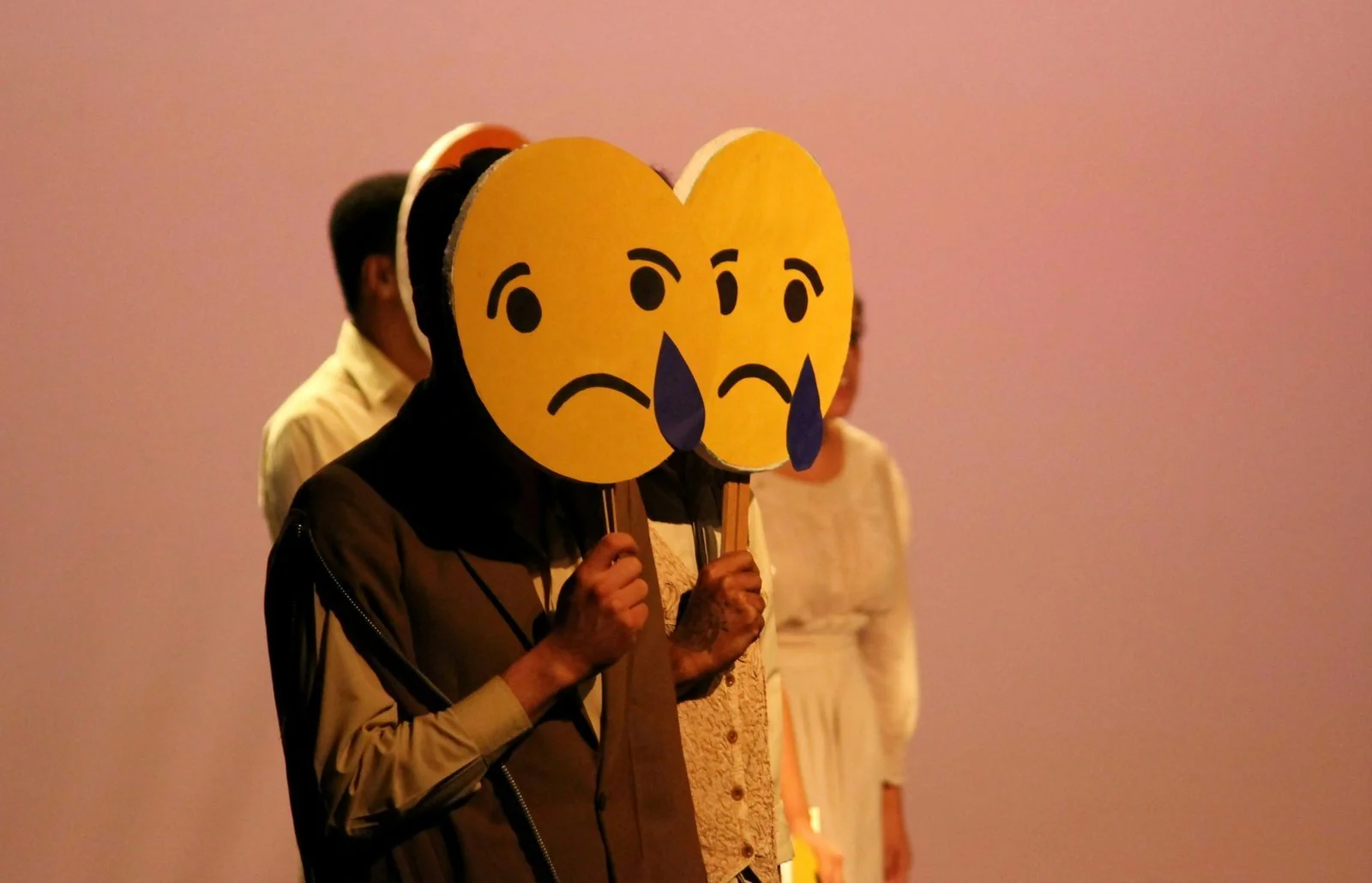
Using objects such as puppets, masks, sand tray figures, and found objects as intermediaries in therapy allows clients to project emotions and narratives onto something external, reducing the direct emotional charge. This can be especially helpful with clients who find direct emotional expression overwhelming.
Masks allow clients to explore identity and persona, taking on qualities they wish to develop or processing aspects of the self they hide. Puppets are particularly effective with children, creating enough distance for children to express things they cannot say directly. Sand tray and object work bridges drama therapy and expressive arts therapy.
Most drama therapists do not adhere to a single model exclusively. Instead, they develop an integrated approach informed by their training, the populations they serve, and the individual needs of each client. A trauma-informed drama therapist might draw on EPR, Narradrama, trauma-sensitive adaptations of psychodrama, and DvT depending on where a particular client is in their healing journey.
For practitioners who want to deepen their understanding of these methods, we recommend the following resources:
Boal, Dunne, Emunah, Fox, Johnson, Landy, Lindkvist, Pearson, Salas, and others, see the methods section of the bibliography for the canonical literature on every approach.
The main drama therapy techniques include: the Integrative Five Phase Model, Psychodrama, Role Theory, Narradrama, Developmental Transformations (DvT), Playback Theatre, EPR (Embodiment-Projection-Role), the Sesame Approach (drama and movement therapy), Theatre of the Oppressed, and projective techniques using objects, puppets, and masks. Each approach has distinct theoretical foundations and clinical applications.
Role Theory, developed by Robert Landy, is a drama therapy framework based on the concept that human beings function through a system of roles, the social, psychological, and archetypal parts we inhabit. Drama therapy using Role Theory explores the client's role repertoire: which roles are overused, which are absent, and which need development. The goal is greater role flexibility and a more integrated sense of self.
Narradrama, developed by Pam Dunne, integrates narrative therapy with drama therapy. Clients externalize problems through story and dramatic embodiment, explore alternative narratives, and develop more empowering accounts of their experience and identity. Narradrama is widely used for trauma, depression, and with children and adolescents.
Developmental Transformations (DvT) is a drama therapy approach developed by David Read Johnson that uses continuous improvisation in a shared 'playspace' between therapist and client. Unlike narrative approaches, DvT works through fluid, non-linear transformation, shapes, characters, and scenarios emerge and dissolve in free play. DvT has strong evidence for trauma treatment, particularly with combat veterans.
Psychodrama, developed by Jacob Moreno, uses structured dramatic enactment to recreate and process past events, relationships, and unexpressed emotions, typically in a group with a designated protagonist and supporting actors (auxiliaries). Drama therapy is a broader field that encompasses psychodrama as one approach among many. Drama therapists are credentialed by NADTA (RDT); psychodramatists by the American Board of Examiners (TEP).
The Sesame Approach is the somatic, body-led UK tradition of drama therapy, founded by Marian 'Billy' Lindkvist in 1964. It works obliquely through movement, myth, and metaphor rather than direct verbal processing. Sessions integrate four strands: movement (Laban-based), drama (Slade-based play), myth and fairy tale (Jungian), and Movement with Touch and Sound (Lindkvist's own method, used with non-verbal clients). The therapist holds and amplifies symbolic material rather than interpreting it. Training is offered through the MA Drama and Movement Therapy at the Royal Central School of Speech and Drama, London.