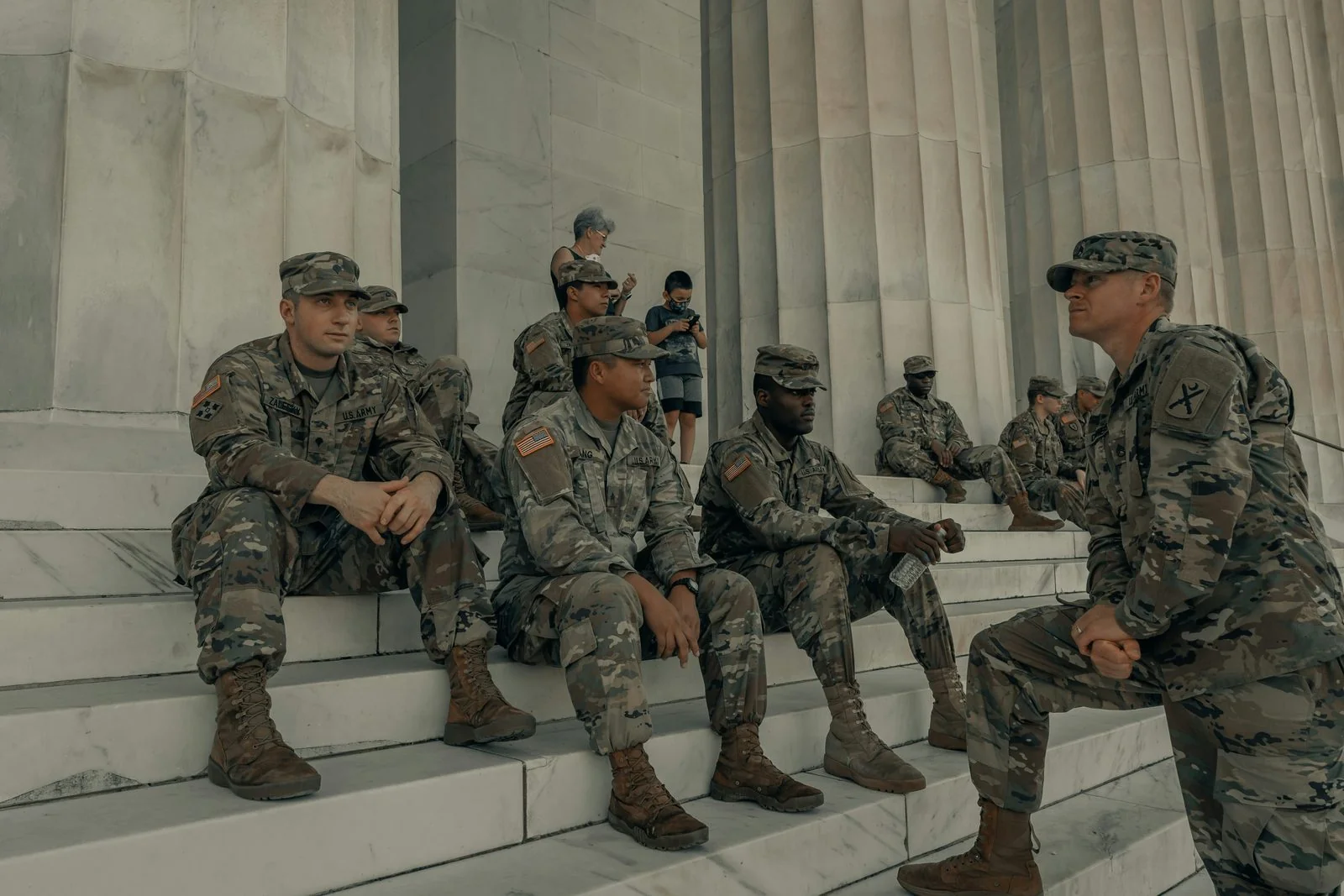
Quick answer: Drama therapy is recognised by the US Department of Veterans Affairs as an evidence-based complementary approach for PTSD. Developmental Transformations (DvT) groups with combat veterans have shown significant reductions in PTSD symptoms. Drama therapy is used in VA programmes and veteran-specific services to address trauma, moral injury, identity transition out of service, and the social isolation many veterans experience in civilian life.
Why veterans and first responders often struggle with standard therapy
Talk therapy works for many people. For a significant proportion of veterans and first responders, it doesn't. Not because these populations are resistant to therapy, but because the most common approaches require a specific kind of engagement, verbal narration of distressing experiences, sitting with difficult emotions in a conversational setting, that runs counter to both the trauma itself and the culture in which these people have worked.
Trauma is stored in the body and in non-verbal memory. Combat trauma in particular involves sensory experience, sound, smell, physical sensation, that doesn't reduce to narrative. Asking a veteran to describe a traumatic incident in words can re-activate rather than process the experience. The body is still in the war, even when the mind is in a consulting room.
Drama therapy approaches this differently. It meets trauma where it lives: in the body, in action, in the space between people. The embodied and action-based methods of drama therapy fit the experience of veterans and first responders in a way that sitting and talking often doesn't.
PTSD: what drama therapy does differently
The standard evidence-based treatments for PTSD are Prolonged Exposure (PE) and Cognitive Processing Therapy (CPT). Both are effective. Both require the client to engage directly with traumatic memories, either through repeated narration or through structured written accounts. For some veterans, this direct approach is intolerable or destabilising.
Drama therapy offers a different route. Working through aesthetic distance, exploring traumatic material through character, metaphor, and story rather than direct re-narration, allows clients to approach the emotional content of trauma without the full activation of the traumatic memory itself. The protective frame of "we are doing drama" holds the experience at a workable distance.
David Read Johnson developed Developmental Transformations (DvT) specifically for use with veterans and PTSD. His research at the VA Connecticut Healthcare System, conducted over more than a decade, documented significant reductions in PTSD symptom severity following DvT groups with combat veterans. The VA has recognised drama therapy as a complementary evidence-based approach, and DvT groups are offered at VA facilities in several states.
Moral injury: the wound that PTSD frameworks miss
Not all combat-related psychological injury is PTSD. Moral injury describes the lasting psychological harm from participating in, witnessing, or failing to prevent actions that violate one's moral code. A soldier who followed orders that led to civilian casualties. A paramedic who couldn't save a child. A veteran who witnessed atrocities they couldn't stop. The symptom profile of moral injury overlaps with PTSD, but the core wound is different: it is not fear, but guilt, shame, and the collapse of a moral framework.
Standard trauma treatments are less effective for moral injury because moral injury is fundamentally a question of meaning and identity, not of fear memory. Drama therapy addresses moral injury directly. Through roleplay and perspective-taking, veterans can examine the context of difficult decisions, hold multiple truths simultaneously, and hear themselves articulate their reasoning. Through narrative and storytelling, they can begin to construct a morally coherent account of what they did and what it means.
This is not about exculpation or making wrongs disappear. It is about building enough moral complexity to live with what happened, and finding a self-story that is honest but not purely condemnatory.
Identity transition out of service
Military service is not just a job. It is an identity. It comes with rank, role, belonging, purpose, and a clear structure that tells you who you are and what you are for. When service ends, all of that disappears, often abruptly. The transition to civilian life involves a grief for identity that is rarely acknowledged and poorly supported.
Many veterans who appear to be struggling with PTSD are also struggling with this identity loss. They don't know who they are without the uniform. Drama therapy addresses this through role work: exploring what identities exist beyond the military role, rehearsing civilian ways of being, and building a sense of self that incorporates service without being wholly defined by it.
The same process applies to first responders who retire or are medically retired from service. The police officer, paramedic, or firefighter who can no longer do the job faces the same identity vacuum, often compounded by physical injury or trauma symptoms that forced the transition.
Group work and peer culture
Individual therapy can feel isolating for veterans. The military ethos values collective experience, peer solidarity, and shared suffering over individual disclosure to an outsider. Veterans who won't talk to a therapist will often talk in a group of peers who have been there.
Group drama therapy is the standard format for veteran work. The group format carries its own therapeutic weight: the normalisation of shared experience, the peer credibility, the sense that others in the room understand in a way that no civilian clinician entirely can. Drama therapy groups also introduce creative risk-taking, trying something unfamiliar, being willing to play, to embody something new, which itself builds the flexibility and tolerance for novelty that PTSD reduces.
Theatre as testimony
Beyond clinical drama therapy groups, there is a growing tradition of theatre-based work with veterans that draws on drama therapy principles: veterans creating and performing theatrical work based on their own experience. Productions created by veteran performers at organisations like Theater of War Productions (which uses ancient Greek tragedy performed for military audiences) draw on the same cathartic and communal mechanisms as clinical drama therapy, applied to a larger canvas.
This work is not strictly clinical. But it demonstrates something about why drama therapy works for veterans: the act of giving experience a form, performing it, and having it witnessed by others who understand, is a specific kind of healing that talk therapy doesn't replicate.
First responders: the parallels and differences
The drama therapy literature on veterans applies in significant part to first responders: police officers, paramedics, firefighters, and emergency dispatchers. The work involves repeated exposure to traumatic events, a culture that devalues emotional disclosure, a strong occupational identity, and high rates of PTSD, depression, substance use, and suicide.
First responders face the additional challenge of cumulative trauma: not a single defining incident but repeated exposures over years, with no defined endpoint or discharge from the stressor. Drama therapy for first responders addresses this cumulative pattern, building affect regulation, processing the accumulated weight of exposure, and providing a creative outlet in an occupational context that typically offers none.
Why action-based reaches further
Combat trauma lives in sound, smell, and physical sensation, not in a story. Asking a veteran to narrate it can re-activate the memory rather than process it. Drama therapy doesn't require that narration. It works in the body, in action, in the space between people, where the trauma actually sits.