Older Adults & Dementia
Drama Therapy for Older Adults & Dementia
How story, reminiscence, and creative expression support wellbeing, social connection, and meaning-making in later life and dementia care.
How story, reminiscence, and creative expression support wellbeing, social connection, and meaning-making in later life and dementia care.
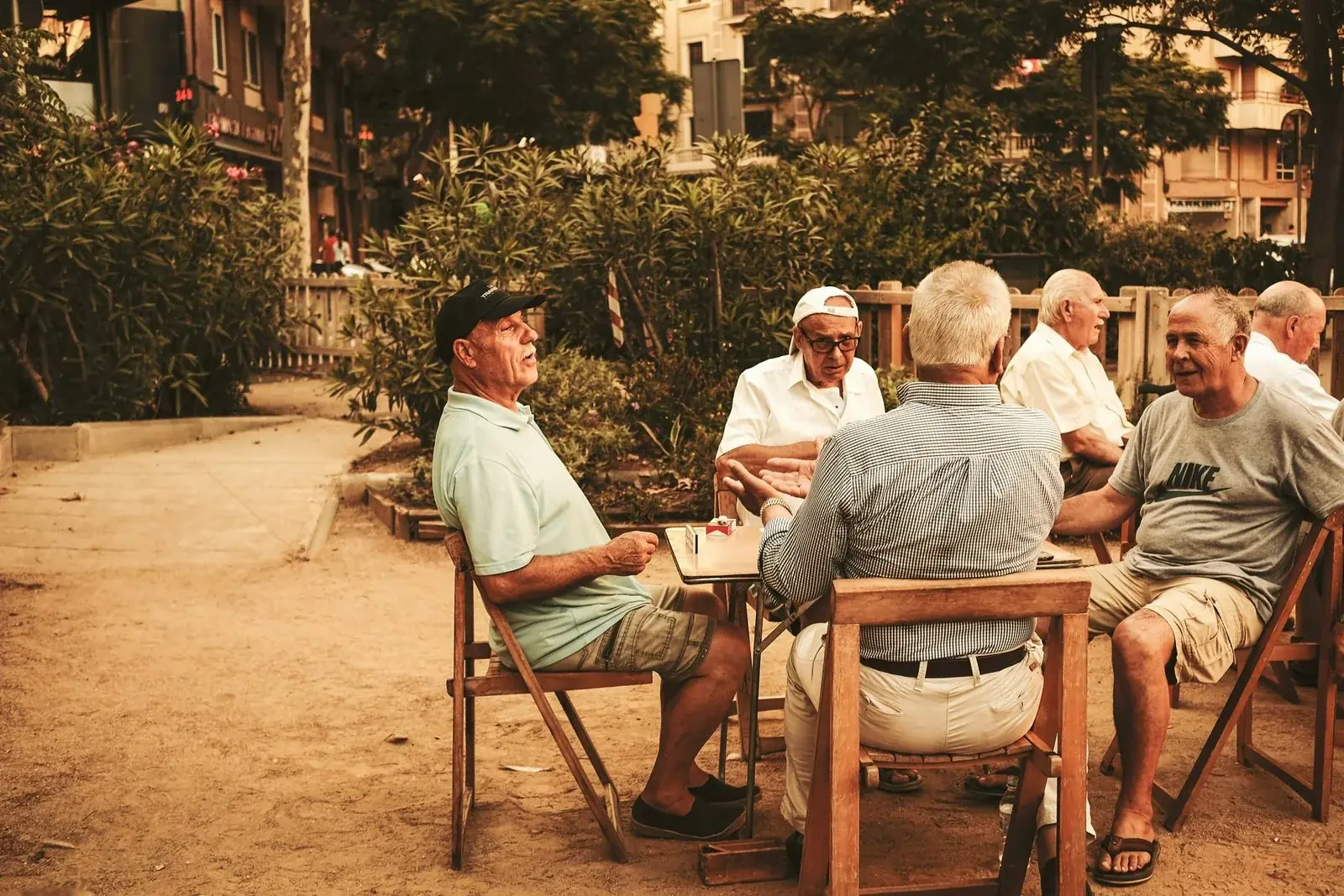
Older adulthood brings a particular set of psychological tasks: making meaning of a life lived, facing physical decline and loss of previous roles, coping with bereavement as peers and partners die, and confronting mortality with whatever resources are available. Standard cognitive therapy addresses some of this. But the tasks of later life are not primarily cognitive. They are existential and relational.
Drama therapy has always had a strong tradition in work with older adults. The emphasis on story, life review, and the creative expression of experience maps directly onto what older adults need therapeutically. The tradition of reminiscence theatre, developed in the UK from the 1980s onwards, brought drama-based approaches into care homes and community settings for older people at scale.
Erik Erikson described the primary psychological task of later life as ego integrity: the capacity to look back at one's life and find it coherent and worthwhile, rather than experiencing despair at perceived failures or missed opportunities. Life review therapy, developed by Robert Butler in the 1960s, operationalised this insight into a structured therapeutic process.
Drama therapy integrates life review into creative work. Older adults explore their life history through storytelling, roleplay of significant memories, and the creation of narrative artefacts: stories recorded, scenes enacted, objects given meaning. The process is not just retrospective. It is also generative: what gets created in a life review process can be shared with family, archived, or performed.
Life review work in drama therapy is particularly useful for older adults who feel that their lives have not been properly witnessed: those who worked in unglamorous jobs, raised families without recognition, or whose experiences were shaped by historical events that are now distant. Being invited to tell and enact your story, and to have it witnessed by a therapist or group who take it seriously, is itself therapeutic.
Dementia is not uniform loss. It destroys some cognitive capacities while leaving others intact for far longer. Short-term memory goes early. Long-term episodic memory, particularly memories with strong emotional charge, often persists well into moderate dementia. Emotional memory, knowing how a person makes you feel, even when you can no longer recall their name, is often the last thing to go.
Drama therapy works with what dementia leaves rather than what it takes. Long-term autobiographical memories, accessed through reminiscence and story, remain available to many people with moderate dementia. Songs from earlier life are often remembered when recent events have been entirely lost. The capacity for emotional connection, for play, for response to story and rhythm, persists.
Sessions with people with dementia are highly adapted: shorter, more structured, with repetition and rhythm built in. Music, movement, and object work are often more accessible than verbal or abstract work. Group sessions in residential settings provide social engagement and stimulation that daily care routines rarely offer.
Reminiscence theatre is a specific drama-based form that emerged from the intersection of oral history, community theatre, and therapeutic work with older adults. Age Exchange Theatre Trust, founded in London in 1983 by Pam Schweitzer, was the first organisation to develop this approach systematically. The process involves gathering memories from older adults through interview and conversation, then shaping those memories into theatrical performance.
The performance can be delivered by professional actors or by the older adults themselves. When older adults are the performers, the therapeutic element is direct: taking on a role, being witnessed, receiving applause, contributing to something larger than individual experience. When professional actors perform the community's stories back to an older adult audience, the effect is one of recognition: your experience mattered enough to be staged.
Reminiscence theatre approaches have been adapted specifically for dementia populations, using familiar historical contexts, songs, and cultural references that activate preserved long-term memory.
Loneliness is one of the most serious health risks for older adults. Research consistently shows that social isolation is associated with mortality rates comparable to heavy smoking. Older adults are particularly vulnerable: retirement removes occupational social networks, bereavement removes partners and peers, and physical limitations reduce access to community.
Drama therapy groups address loneliness directly. They give older adults a reason to gather regularly, a shared creative purpose, and relationships with peers that develop over time. The group is not simply a social club: the creative work builds genuine connection because it requires mutual vulnerability and shared investment in something beyond idle conversation. People reveal themselves through the stories they choose to tell and the characters they choose to play.
Drama therapists working in palliative care and hospice settings with older adults address the specific psychological work of dying: completing unfinished relational business, finding meaning in a life that is ending, and creating a legacy that will persist after death. Life review and the creation of legacy objects or performances are central to this work.
This work also supports family members and carers. The family of a person who has gone through a drama therapy life review process often receives something invaluable: a witnessed, articulated account of that person's experience, preserved in a form that survives them.
Dementia is not uniform loss. Short-term memory goes early. Long-term emotional memory, knowing how a person makes you feel, recognizing a song from your youth, often persists long after names have gone. Drama therapy works with what remains, not against what's lost.
| Setting | Format | Primary focus |
|---|---|---|
| Residential care homes | Group, weekly, adapted for mixed abilities. | Engagement, mood, agitation reduction. |
| Day centres / community | Group, community-dwelling older adults. | Loneliness, peer connection, meaning. |
| Hospital / psychiatric wards | Short-term group or individual. | Older adult mental health, rehabilitation. |
| Hospice / palliative care | Individual; sometimes with family. | Life review, legacy, end-of-life meaning. |
| Reminiscence theatre | Community project, performance element. | Intergenerational witness, life honored publicly. |
Also relevant: Drama therapy for grief and drama therapy techniques.
Drama therapy for older adults supports reminiscence and life review, social connection and reduced isolation, emotional expression and wellbeing, cognitive engagement, and end-of-life meaning-making. Research shows improvements in mood, social functioning, and quality of life following drama therapy interventions with older adult populations.
Yes. Drama therapy works with what dementia leaves intact: long-term episodic memory, emotional memory, musical engagement, and the capacity for story. It is used in dementia care settings with evidence of benefit for mood, agitation, social engagement, and quality of life. Sessions are adapted for varying cognitive levels.
Reminiscence theatre uses older adults' own memories and life stories as performance material. Personal and collective memories are gathered through conversation and interview, then shaped into theatrical performance, by professional actors or by the older adults themselves. Age Exchange Theatre Trust in London pioneered this approach, which is now used in care homes, community settings, and with dementia populations.
Yes. Drama therapy adapts well to residential care settings: sessions run in communal spaces, accommodate mixed cognitive abilities and physical limitations, and build community within a shared living environment. The social context of residential care makes the community-building and meaning-making functions of drama therapy particularly relevant.
Drama therapy groups give older adults a reason to gather regularly, a shared creative purpose, and peer relationships that develop through genuine mutual investment in the work. Loneliness is a serious health risk for older adults. Group drama therapy addresses it directly rather than as a secondary benefit.
Online-Therapy.com is a structured online therapy platform with worksheets, journals, video sessions, and licensed therapists. A useful bridge if you need to start online while searching for a specialty drama therapist.
Crimmins, Johnson & Sandel, Larson, Marshall, Schweitzer, Strimling, Weisberg & Wilder, Wilder, see the older adults section for the full reading list.