Two things sustain a drama therapy practice.
The clinical work. And the business behind it.
This is the hub for practicing drama therapists. Two arcs: deepening your clinical skills, and building a practice that can actually hold you. Techniques, supervision, CEUs, and books on one side. EHR, insurance, finances, marketing, and referrals on the other.

Building a drama therapy private practice means working two parallel tracks: deepening clinical skills (advanced credentials, supervision, continuing education) and building a business (state licensure, EHR, insurance or self-pay model, marketing, referrals). US median session fee for private practice is around $110. See our salary guide for how private practice income compares with employed roles. Most state boards require an LMHC, LCSW, LMFT, or LCAT licence to bill insurance, in addition to the RDT credential. This page covers both tracks in practical detail.
for US private practice
licenses require yearly
full caseload from scratch
business infrastructure
Some links on this page are affiliate links. If you sign up for a platform through our link, we may earn a referral fee at no cost to you. We only recommend tools we consider genuinely useful for drama therapy practices.
Deepen Your Clinical Skills
Advanced credentials, specialist training, continuing education, supervision, and the clinical literature that sharpens practice over a career.
Advanced Credentials & Pathways
Beyond the initial RDT, these credentials signal specialist-level competence and open doors to teaching, supervision, and leadership roles.
- What it is: the advanced NADTA credential for drama therapists who train and supervise others. See the official NADTA BCT page for the full overview.
- Requirements: active RDT status, 3+ years post-RDT experience, 200+ hours of supervision provided, advanced training program completion. Current requirements are listed on the NADTA Education & Credentialing page.
- Why pursue it: required to provide NADTA-approved supervision; enables you to run approved training programs; significantly raises professional profile
- Apply through: nadta.org/board-certified-trainers-bct, contact the NADTA credentialing committee for the current application packet.
- EMDR, EMDRIA: pairs powerfully with drama therapy for complex trauma. Basic Training (two parts, ~50 hours plus 10 hours of consultation), then a path to full Certification through EMDRIA-Approved Consultants.
- Somatic Experiencing, SE International: 3-year training (Beginning, Intermediate, Advanced); highly complementary to embodied drama therapy. Leads to the SEP (Somatic Experiencing Practitioner) credential.
- Trauma-Focused CBT, TF-CBT National Certification: evidence-based protocol for child and adolescent trauma. Online training plus supervised cases; expands insurance-reimbursable services for child-focused practices.
- Play Therapy, APT (RPT & RPT-S): Registered Play Therapist credential through the Association for Play Therapy. Natural complement for drama therapists working with children and families.
- Internal Family Systems, IFS Institute: Levels 1, 2, and 3 trainings; parts work pairs naturally with role-based drama therapy methods (Landy's Role Theory, sub-personality work).
- Psychodrama (CP / TEP), ABE & ASGPP: the closest sister discipline. Certified Practitioner (CP) and Trainer/Educator/Practitioner (TEP) credentials through the American Board of Examiners; trainings hosted by ASGPP and regional psychodrama institutes.
- Sensorimotor Psychotherapy, SPI: body-based trauma and attachment work in three levels (Trauma; Developmental Injury; Complex Trauma). Aligns directly with drama therapy's embodied frame.
Continuing Education & Training Platforms
Platforms offering CE credits, specialty courses, and live trainings relevant to drama therapists.
NADTA's annual conference is the central CE source for drama therapists, with workshops and presentations spanning the field. Throughout the year, NADTA also runs occasional online workshops, member meetings, and special interest group events relevant to drama therapy practice. Members get discounted registration.
Visit NADTAOne of the largest CE providers for mental health professionals. Strong trauma, somatic, and expressive therapies catalogue. APA, NASW, NBCC, and state-board approved credits.
Browse PESIPsychotherapy training taught by leading clinicians, including somatic, trauma, and creative approaches. Video-based, self-paced, and available as a subscription. Particularly strong on trauma models.
Visit PsychwireThe SE training programme, 3 years, 12 modules. The gold standard for body-based trauma training. Highly complementary to drama therapy's embodied approach. CPD certificates at each module.
SE InternationalTraining, certification, and continuing education for group therapists. CGPGP (Certified Group Psychotherapist) credential available. Drama therapy's group roots make this a natural fit.
Explore AGPAInternational Expressive Arts Therapy Association, training, certification (REAT), and conference. For drama therapists who want to broaden into multi-modal expressive arts approaches.
Visit IEATASupervision & Consultation
Ongoing supervision is how clinical skills actually develop. It is also required for BCT candidacy.
-
Find an NADTA-approved supervisor
The NADTA member directory includes supervisors available for consultation and supervision. Search by state or telehealth availability. Prioritise supervisors who have worked with your population focus.
-
Establish a consultation group
Peer consultation groups, 3 to 6 therapists who meet monthly to present cases, are more sustainable than individual supervision for licensed post-RDT therapists. They provide the relational accountability that individual work can lack.
-
Track your supervision hours
If you're working toward BCT, you must document supervision hours you have both received and provided. Keep a log from day one, it is much harder to reconstruct retroactively.
-
Consider specialty-specific supervision
For populations like veterans, children, or eating disorders, consider supplemental supervision from a specialist in that area, even if they are not a drama therapist. The clinical knowledge transfers.
After licensure, you typically are not required to have supervision, but the work still demands external perspective. Consultation (peer or paid) is how experienced therapists stay sharp, avoid drift, and process countertransference without the formal power dynamic of supervision.
Budget for 1 to 2 consultation hours per month as a practice expense. It is tax-deductible as professional development.
Clinical Library
The texts that deepen practice. For a full reading list, see our drama therapy books page.
As an Amazon Associate, we earn from qualifying purchases. These links cost you nothing extra and help keep this site free. Full affiliate disclosure.

The foundational clinical framework. Emunah's Integrative Five Phase model remains the clearest map of how drama therapy progresses over treatment. Required reading.
View on Bookshop or Amazon
A broad survey of drama therapy theory and practice, written for practitioners who want command of the full range of methods and their evidence base.
View on Bookshop or Amazon
The contemporary standard for trauma-informed practice across drama therapy. Edited collection covering clinical, school, and community settings, pairs theory with detailed case material. Useful whether trauma is your specialty or simply present (it usually is) in the work.
View on Bookshop or Amazon
Not a drama therapy text, but the most important book for understanding why embodied approaches work with trauma. It gives you language for explaining your work to clients, referrers, and insurers.
View on Bookshop or Amazon
The definitive text on group therapy process. Drama therapy's group applications draw heavily on Yalom's curative factors, understanding them sharpens how you work with group dynamics.
View on Bookshop or Amazon
Landy's role theory, one of drama therapy's core frameworks, laid out in full. Written for practitioners who use role-based methods and want the theoretical foundation behind the technique.
View on Bookshop or Amazon
A landmark edited volume on autobiographical, self-revelatory, and autoethnographic forms of therapeutic theatre. Indispensable for any practitioner moving toward performance work or culminating enactment with clients.
View on Bookshop or Amazon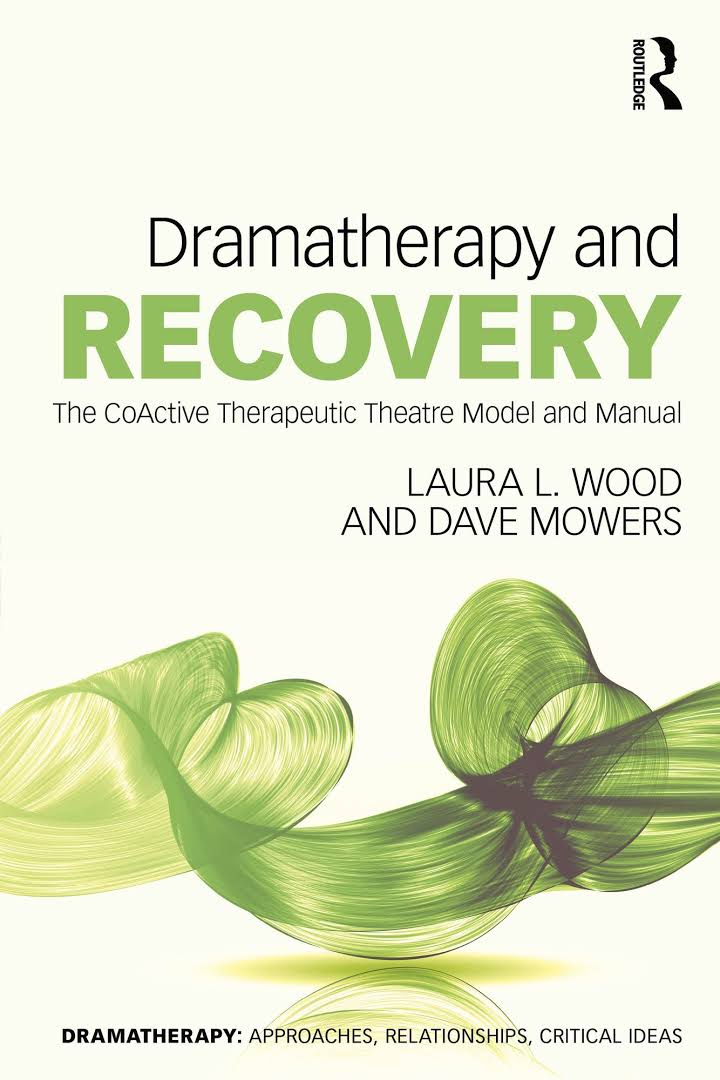
The CoActive Therapeutic Theatre model and manual, a contemporary, evidence-grounded approach for recovery work. Particularly useful if your practice touches addiction, mental health recovery, or community-based group settings.
View on Bookshop or Amazon
The broadest single-volume survey of drama therapy approaches available. Role Theory, Narradrama, Sesame, Playback, Psychodrama, DvT, and more, each chapter written by a leading practitioner in that method. The reference you reach for when you need to ground a clinical decision in the broader field.
View on Bookshop or Amazon
Craft alone doesn’t pay rent. Systems alone won’t hold a client.
The therapists who sustain a drama therapy practice build both. They read Landy and they reconcile their books. They attend supervision and they track their CAC. The next section covers the operational side, the infrastructure that lets you focus on clients instead of admin.
Continue to Track 2 →Build Your Business
The operational infrastructure that lets you focus on clients instead of admin. EHR, billing, accounting, legal structure, marketing, and the networks that fill a caseload.
Practice Management & EHR
Your EHR is the operational core, scheduling, notes, billing, and telehealth in one system. Choosing wrong costs time every working day.
The most widely adopted EHR for private practice therapists in the US. Everything in one platform, scheduling, HIPAA telehealth, automated reminders, superbills, and clinical notes. Clean, intuitive interface that doesn't require IT support.
- HIPAA-compliant video therapy (no Zoom needed)
- Automated appointment reminders (reduces no-shows)
- Intake forms + consent docs you can customise
- Billing, superbills, insurance claims
- Client portal for self-scheduling
- Progress notes with customisable templates
Headway handles the entire insurance side, credentialing with major insurers, claims submission, and payment deposits. Free for therapists; they earn from the insurance side. Reduces admin by hours per week if you accept insurance.
- Credentialing with 30+ insurance networks
- Automated insurance billing and claims
- Rate negotiation on your behalf
- Same-week payment deposits
- HIPAA telehealth included
Built around clinical documentation, with detailed note and treatment-plan templates. It starts higher than SimplePractice's entry tier and the interface is less beginner-friendly. Best for practices where note quality and compliance matter more than ease of setup.
- Excellent clinical note and treatment plan templates
- Built-in billing and clearinghouse
- Telehealth included
- Strong HIPAA compliance documentation
Strongest in Canada, the UK, and Australia, and well suited to multi-disciplinary clinics. Less optimised for US insurance billing than SimplePractice or Headway, so it mainly makes sense if you're outside the US or running a mixed-modality practice.
- Multi-practitioner and multi-discipline support
- Excellent client-facing booking experience
- Strong in Canadian healthcare billing
- Telehealth, forms, and notes included
Aimed at group practices and agency settings, with per-active-client pricing that suits variable caseloads. Less of a fit for a solo therapist, where SimplePractice's flat pricing is simpler to predict.
- Per-active-client pricing (not monthly flat fee)
- Wiley Treatment Planner integration
- Group session notes and billing
- Telehealth included
Alma bundles insurance credentialing, billing, and business support into a membership model. The membership fee is the highest fixed cost in this list, and you work within Alma's insurance network rather than your own — a tradeoff some new therapists accept for the hand-holding.
- Insurance credentialing and billing handled
- Community and peer support resources
- Practice-building training included
- Client matching feature
Finance, Accounting & Tax
Running a practice means running a business. These tools handle the money side, bookkeeping, tax prep, invoicing, and financial tracking.
The industry standard for self-employed professionals. Automatically categorises expenses, tracks mileage, calculates quarterly tax estimates, and connects directly to TurboTax. Particularly good for sole proprietor drama therapists.
- Separates business and personal expenses automatically
- Quarterly estimated tax reminders
- From $15/mo · TurboTax export included
Completely free accounting and invoicing software, no monthly fee. Excellent for drama therapists starting out who want basic bookkeeping without the overhead. Invoicing, expense tracking, and financial reports included.
- Free forever, no subscription required
- Professional invoices with online payment
- Good until income exceeds ~$100K/year
A dedicated business bank account is not optional, it is a legal and tax requirement for LLCs, and strongly recommended for sole proprietors. Relay is an online business bank with no monthly fees, multiple expense accounts, and clean QuickBooks integration.
- No monthly fees, no minimum balance
- Up to 20 sub-accounts for expense management
- Integrates with QuickBooks and Wave
Mike Michalowicz's Profit First method adapted for therapy practices, allocate income into separate accounts (profit, tax, operating expenses, pay) before spending. Prevents the end-of-year tax shock many solo therapists face.
- The system that replaces "wondering if there's enough"
- Works best paired with Relay's multi-account system
Business Structure & Legal Foundations
The decisions you make in year one set the legal and financial frame for everything after. Get these right from the start.
- Sole proprietor: simplest structure, you are the business. No state filing required. All income and liability is personal. Fine for starting out.
- Single-member LLC: separates personal and business liability. Required in some states for licensed therapists. Taxed the same as sole proprietor (pass-through). ~$50 to 500 state filing fee.
- S-Corp election: relevant once income exceeds ~$60 to 80K/year. Reduces self-employment tax by splitting income into salary + distribution. Requires payroll setup.
- Recommendation: form an LLC in your first year; revisit S-Corp election with a CPA once you're consistently earning $60K+
- HPSO (Healthcare Providers Service Org): the most widely used malpractice insurer for drama therapists and creative arts therapists in the US. ~$200 to 300/year for solo practitioners.
- CPH & Associates: strong alternative with competitive rates and good customer service. Popular among expressive arts therapists.
- NASW Insurance Trust: option for licensed social workers who are also drama therapists.
- General liability: separate from malpractice, covers property damage and bodily injury in your office space. Required by most landlords for office rental.
- Never practice without malpractice insurance, even if you believe your work is low-risk.
Business Books Worth Reading

A therapist-specific practice-building guide, marketing your niche, setting fees, managing finances, and building referral networks. One of the most practical books available for therapists new to private practice.
View on Bookshop or Amazon
The clearest system for managing business finances, allocate income to profit, tax, and operating expense accounts before spending anything. Eliminates the end-of-year tax panic that hits most solo practitioners.
View on Bookshop or Amazon
Why most small businesses fail, and how to build a practice that runs as a system rather than depending on you to hold every piece. Shifts the mindset from "clinician who also does admin" to "practice owner."
View on Bookshop or AmazonGetting Clients: Where to Start
A full caseload rarely happens by accident. These are the channels that actually work for drama therapists.
| Channel | Priority | How to use it | Time investment |
|---|---|---|---|
| Psychology Today directory | High | Create a detailed profile, list drama therapy explicitly, not just "expressive arts". Include population specialties. ~$30/mo but generates consistent inquiries for therapy seekers. | 2 to 3 hrs setup, 30 min/month |
| NADTA member directory | High | Ensure your listing is complete and current. This is where drama therapy-specific seekers look first. Free with NADTA membership. | 1 hr setup |
| Google Business Profile | High | Claim and complete your free Google Business listing. Appears in "drama therapist near me" searches. Add photos, hours, specialties. Request reviews from former clients (ethically). | 2 hrs setup, monthly updates |
| Your own website | High | A simple 5-page site (About, Services, FAQ, Contact, Blog) outranks directory listings long-term. Write one blog post per month about your specialty. Squarespace or Wix for non-technical practitioners. | 1 weekend to launch, 2 hrs/month |
| GP and GP practice referrals | Medium | Introduce yourself by letter or in-person to local family medicine and psychiatry practices. One warm relationship with a psychiatrist can fill a caseload. | Half-day per quarter |
| School and university partnerships | Medium | School counsellors and university counselling centres are consistent referral sources for children and young adult drama therapists. Offer a free informational session. | Relationship-building over months |
| LinkedIn presence | Medium | Post about drama therapy monthly, case concepts (no identifying info), research, or training reflections. Builds professional network and occasionally generates referrals from other therapists. | 1 hr/week |
| Therapist Facebook groups | Medium | Groups like "Private Practice Therapists" and drama-therapy-specific groups. Answer questions, share resources, build reputation as a knowledgeable practitioner. | 30 min/week |
Tools to fill a private practice.
Two practical tools that pay for themselves quickly. Headway lets licensed therapists accept insurance without becoming in-network with each insurer separately. They handle credentialing, claims, and reimbursement. Psychology Today hosts the largest therapist directory in North America (over 20M visitors/month) and is one of the strongest sources of organic client referrals for private practice.
Build Your Network
Drama therapy is a small field. The network you build is a professional resource for decades.
The core of the professional network. Annual conference, regional networks, listservs, and the member directory. Membership includes access to the NADTA journal.
The field's main gathering. Workshops, paper presentations, and informal networking. Where supervision relationships, collaborations, and referral partnerships form.
Active LinkedIn groups for drama therapists and expressive arts practitioners, useful for international connections, job postings, and staying current with the field's direction.
Start or join a consultation group of 4 to 6 drama therapists who meet monthly. Present cases, share challenges, provide mutual accountability. More sustainable than one-on-one supervision.
Build intentional referral relationships with psychiatrists, school counsellors, pediatricians, and other therapists. One referral source who understands your work can sustain a caseload.
Active practitioner communities on Facebook, job posts, resource sharing, peer support, and field news. Good for connecting with drama therapists outside your geographic area.
Many states have drama therapy or expressive arts therapy associations with local events, continuing education, and legislative advocacy. More accessible than national NADTA for day-to-day networking.
Offer workshops at counselling centres, schools, or community organisations. Teaching drama therapy builds name recognition, demonstrates expertise, and generates referrals from attendees who know practitioners like you.