Drama Therapy for Children
How play, story, and creative enactment help children heal, grow, and thrive, and what to expect when your child sees a drama therapist.
weekly or fortnightly
home-life changes tend to show
drama therapy addresses for kids
follow the child's play
Why Play and Story Are Therapeutic for Children
Children do not think, feel, or communicate like small adults. Their primary mode of processing experience is through play, story, and symbolic expression. When a child plays out scenarios with toys, creates imaginary worlds, or embodies characters in dramatic play, they are not just entertaining themselves. They are doing the cognitive and emotional work of making sense of their experience, rehearsing social roles, and processing feelings that they cannot yet articulate.
Drama therapy harnesses this natural capacity deliberately. A drama therapist creates a safe, structured space in which a child's play and story-making can become healing, by carefully witnessing it, gently shaping it, and providing the relational holding that makes new emotional experience possible.
What Drama Therapy Looks Like for Children
Drama therapy sessions for children do not look like adult therapy sessions. There is no couch and no "how do you feel about that?" A child's drama therapy session might include:
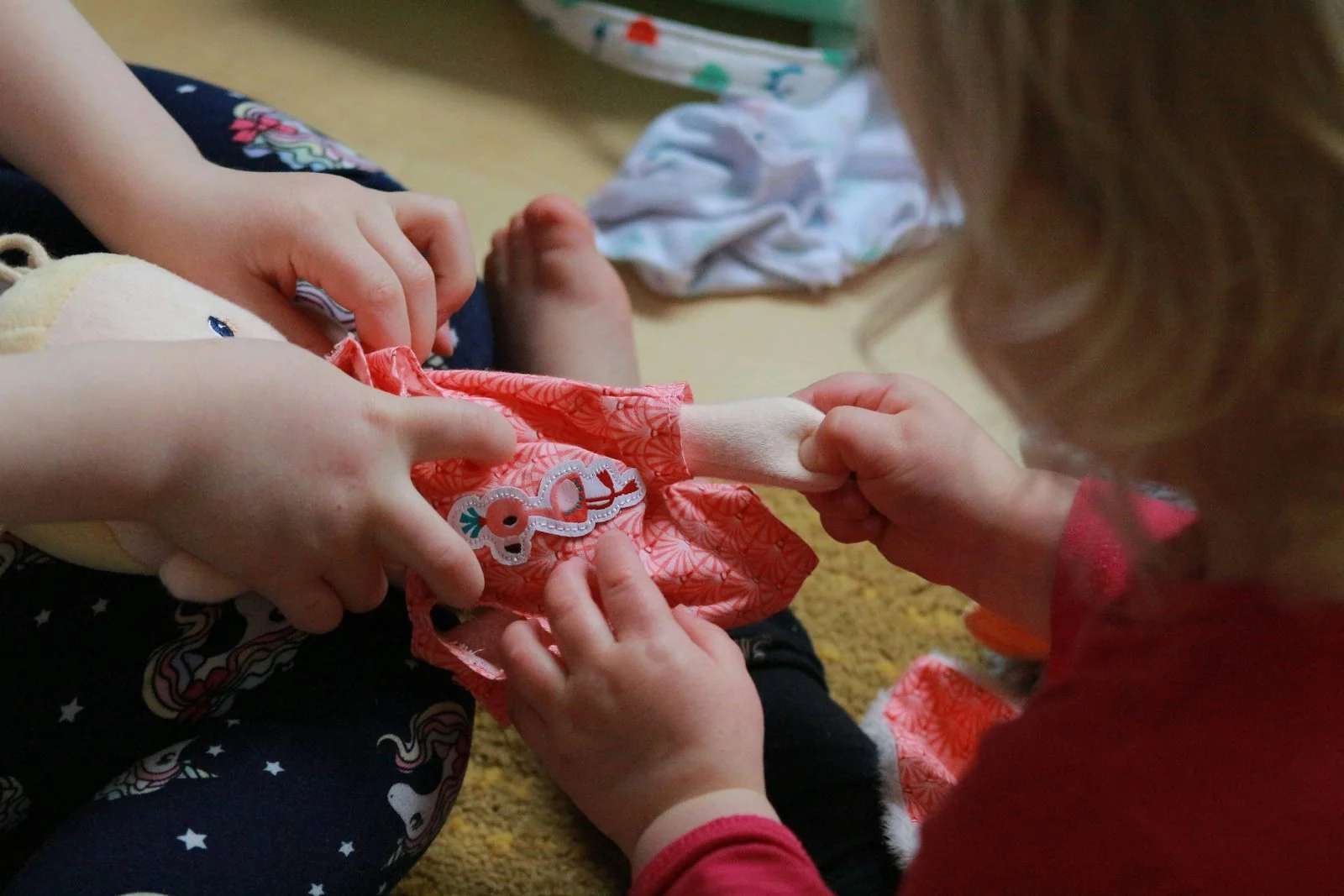
- Puppet play: Using puppets, dolls, or stuffed animals to enact scenes, tell stories, or give voice to feelings. Puppets provide protective distance so the child can say through a puppet what they cannot say directly.
- Object theatre: Using any available objects, such as toys, sand tray figures, or art materials, to create scenes and narratives. The therapist follows the child's lead and sometimes gently introduces elements that invite exploration of difficult material.
- Roleplay and dramatic play: Older children and adolescents may use roleplay more directly, playing out scenarios, trying on characters, or rehearsing situations from their lives.
- Storytelling and narrative work: Creating and telling stories, sometimes with illustrated cards, story cubes, or just spoken narrative. Stories allow children to explore experiences symbolically.
- Movement and embodied play: Physical games, dance, movement activities, and embodied play that engages the whole child.
- Art and creative expression: Many drama therapists integrate drawing, collage, or mask-making as part of the dramatic work.
Sessions are child-led in direction and pacing. The therapist is highly attuned and responsive in following the child's play, while also holding a therapeutic frame that keeps the work purposeful and safe.
Conditions Drama Therapy Helps Children With
Trauma and Abuse
Children who have experienced trauma, including abuse, neglect, domestic violence, accidents, or medical trauma, often cannot or will not talk about what happened. Play and story allow them to approach traumatic experience at a safe distance: externalizing it through characters and scenarios rather than direct first-person narration. Projective techniques (puppets, objects, sand) are particularly valuable for protecting children from re-traumatization while still allowing processing.
Drama therapy for traumatized children is always trauma-informed: paced carefully, with safety and choice prioritized, and using aesthetic distance rather than direct re-enactment.
Anxiety and Fear
Anxious children often engage better with drama therapy than with talk therapy because play naturally reduces the self-monitoring that anxiety creates. Through stories about characters who face fears, puppet scenarios that allow rehearsal of frightening situations, and group games that build confidence, drama therapy addresses anxiety at a level children can genuinely access.
Behavioral and Emotional Difficulties
Children presenting with behavioral difficulties (aggression, oppositional behaviour, emotional dysregulation) often benefit from drama therapy because it works on the underlying emotional experience driving the behavior rather than just the behavior itself. Drama therapy builds emotional vocabulary, self-regulation, empathy, and perspective-taking, all of which directly reduce problematic behavior when developed.
Autism Spectrum Conditions
Drama therapy has a growing evidence base for supporting autistic children and adolescents. Structured roleplay, social story work, and group drama activities have been shown to improve social communication, emotional recognition, and peer connection in autistic young people. Drama therapy does not aim to normalize autistic children. It works with each child's authentic communication style to support connection, expression, and wellbeing.
Grief and Loss
Children grieve differently from adults, often intermittently and through play, without the capacity for sustained verbal reflection. Drama therapy supports grieving children through ritual, story, and symbolic play: creating memorial stories about the person or animal who died, using objects or puppets to enact what they miss, and finding imaginative ways to maintain continuing bonds with those who are gone.
Family Disruption
Children experiencing parental separation, divorce, parental illness, or major family transitions often carry their distress in play and behavior before they can articulate it. Drama therapy provides a containing space in which these experiences can be explored symbolically, feelings can be validated, and children can develop their sense of security and agency within changing circumstances.
Developmental Delays
Drama therapy's use of play, movement, and story makes it accessible for children with a wide range of developmental differences. Embodied, multisensory methods can support language development, social learning, sensory regulation, and imaginative play in children with developmental delays or differences.
Your child won't be asked "how do you feel?", and they don't need to know what drama therapy is before starting. They just come and play. The therapist's job is to follow that play with care, watch what keeps returning, and hold a frame that makes the difficult stuff approachable.
Drama therapy vs. play therapy
They overlap more than they differ. What matters is finding a well-trained practitioner your child feels safe with.
| Theatrical rootsDrama therapy | Play-firstPlay therapy | |
|---|---|---|
| Credential | RDT (NADTA), graduate training in theatre + therapy. | RPT (Association for Play Therapy). |
| Core material | Story, role, character, enactment, dramatic form. | Play, broadly, directive and non-directive approaches. |
| Age range | Works from toddlers through adolescents; scales with child. | Typically ages 3 to 12; adolescent work is less common. |
| Session feel | Child-led, story-rich. Puppets, objects, roles, movement. | Child-led, toy-rich. Sand tray, art, symbolic play. |
| Overlap in practice | High. Many child drama therapists use methods that overlap significantly with play therapy. | |
How a child's session tends to flow
Hello ritual
A consistent opening, a song, a greeting object, a check-in game. Predictability settles the nervous system.
Free or guided play
Puppets, objects, roleplay, story-making. The therapist follows the child's lead and watches what keeps returning.
Enactment or story
A scene, a story, a drawing, where the harder material tends to surface, safely held in the character or object.
Goodbye ritual
A closing routine mirrors the opening. The child leaves grounded, knowing what happens next time.
What to Expect as a Parent
If you are considering drama therapy for your child, the initial assessment will involve a meeting with you to understand your child's needs, history, and what you are hoping for from therapy. Your child will not need to know what drama therapy is before starting. They just come and play. Sessions are usually 50 minutes, weekly or fortnightly. You will not typically sit in on sessions, as this can inhibit the child's freedom to explore. The therapist will provide regular updates on how the work is progressing.
Progress in child therapy often shows up first at home, in changes in sleep, behaviour, or mood, before you see obvious change in the sessions themselves. Give it at least 6 to 8 sessions before assessing whether it is working. Child therapy takes time, and the therapeutic relationship is built gradually.
Frequently Asked Questions
What is drama therapy for children?
Drama therapy for children is a form of psychotherapy that uses play, storytelling, puppets, roleplay, and dramatic enactment to support children's emotional, social, and developmental wellbeing. It meets children in their natural language (play) and is conducted by a Registered Drama Therapist (RDT) trained in child development and therapeutic methods.
What conditions does drama therapy help children with?
Drama therapy helps children with trauma and abuse, anxiety and fear, behavioral and emotional difficulties, autism spectrum conditions, developmental delays, family disruption, grief, social difficulties, low self-esteem, and school-based challenges. It is one of the most developmentally appropriate therapeutic approaches available for children.
How is drama therapy different from play therapy?
Both approaches use play and are child-led. Drama therapy specifically draws on theatrical methods: character work, story, role, and enactment. Drama therapists hold an RDT credential from NADTA with graduate-level training in theatre and therapy. Play therapists hold credentials from the Association for Play Therapy. Some practitioners hold both credentials.
What age can children start drama therapy?
Drama therapy can be adapted for children from approximately age 3 upward. With very young children (3-5), the work is highly play-based and non-directive. With children 6-12, structured story, puppet, and roleplay work is typically used. With adolescents, more complex character work and narrative exploration is possible. The approach is always adapted to the child's developmental stage.
Should parents be involved in their child's drama therapy?
Parental involvement varies by the child's age, presenting concerns, and the therapist's approach. Many drama therapists meet with parents separately for assessment and periodic updates while keeping the child's sessions private. Parents are typically not present during sessions, as this can limit the child's freedom to explore and express. The drama therapist will guide what involvement is most helpful.
Looking for a therapist for your child?
Online-Therapy.com is a structured online therapy platform with worksheets, journals, video sessions, and licensed therapists. A useful bridge if you need to start online while searching for a specialty drama therapist.
Anxiety · Autism · Trauma · Find a Therapist
Further reading
Bannister, Bouzoukis, Cattanach, Jennings, Leigh et al, MacFarlane, and others, see the children section of the bibliography for ~20 books on drama therapy and play therapy with children.